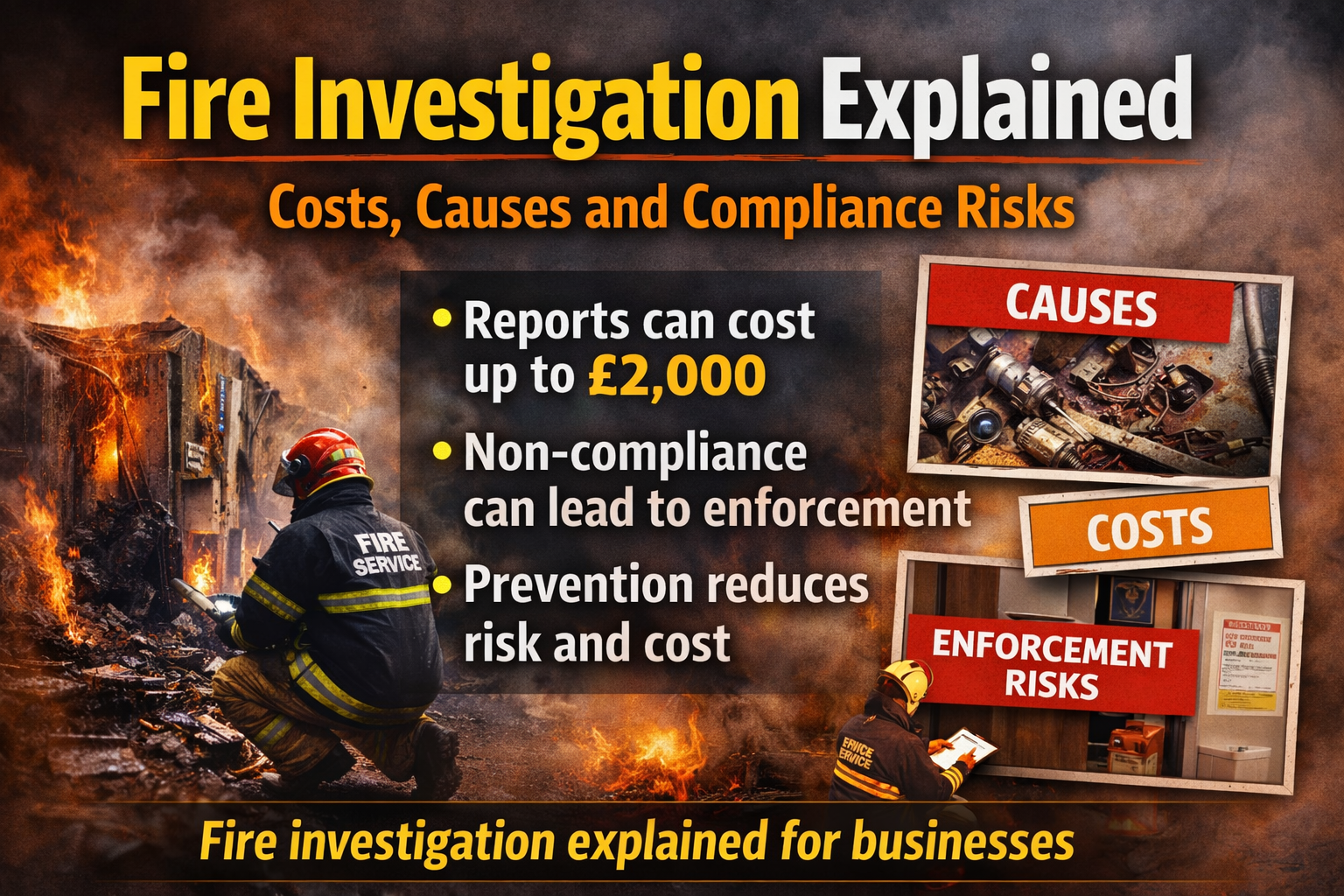
When Surrey Fire and Rescue Service attends an incident, particularly one involving fire, smoke, repeated false alarms or unusual circumstances, it may be necessary for a formal fire investigation to take place.
Fire investigation is a critical function of the fire service, designed not only to establish what happened, but to prevent similar incidents occurring again.
While emergency response focuses on immediate life safety, fire investigation looks beyond the initial incident to understand cause, responsibility and compliance.
This work plays an essential role in public safety, enforcement, and learning lessons that improve fire prevention across communities and businesses.
Why fire investigations are carried out
Fire investigations are not undertaken automatically after every call-out. They are typically required where there is:
- A fire involving property damage
- Evidence of repeat incidents or patterns of failure
- Concern that the fire may have been deliberately started
- Indications that fire safety measures were inadequate or poorly maintained
- The potential for legal or insurance implications
In commercial premises, investigations are more likely where systems such as fire alarms, electrical installations or safety management arrangements are involved.
Fire investigators aim to determine:
- The origin and cause of the fire
- Whether the incident was accidental, deliberate, or due to negligence
- How fire and smoke spread through the building
- Whether fire precautions performed as intended
- Whether fire safety legislation was complied with
This process helps ensure accountability and provides valuable evidence where enforcement action or prosecution may be required.
What fire investigation involves
Fire investigation is a specialist discipline requiring training, experience and time. It often involves:
- Detailed scene examination
- Use of specialist equipment and testing methods
- Review of fire alarm activations and system data
- Interviews with responsible persons, staff or witnesses
- Examination of maintenance records and risk assessments
- Production of formal written reports
Investigations may require multiple site visits and coordination with other agencies, including the police, local authorities, insurers or enforcing bodies.
This work takes place after the emergency phase, once the immediate risk to life and property has been eliminated.
Why fire investigation reports are chargeable
Detailed fire investigation reports are listed as a chargeable service because they sit outside the fire service’s core statutory emergency response duties. They require significant staff time and specialist input, often over extended periods.
Surrey Fire and Rescue Service has confirmed that detailed investigation reports are charged based on the time and seniority of staff involved, with costs typically ranging from £500 to £2,000.
These costs reflect:
- The expertise required to carry out investigations correctly
- The time spent gathering and analysing evidence
- The production of legally robust reports
- The need to support enforcement or legal proceedings
Charging for investigations helps ensure that public funds remain focused on life-saving response, while allowing fire services to recover the cost of specialist work.
The connection between fire investigation and fire risk assessments
One of the most common outcomes of a fire investigation is the identification of failings in fire risk management. Investigators frequently find that incidents could have been avoided if a suitable and sufficient fire risk assessment had been in place and acted upon.
Common issues identified during investigations include:
- Fire risk assessments that are outdated or generic
- Known hazards that were not addressed
- Poor maintenance of fire alarms, electrical systems or ventilation
- Inadequate staff training or procedures
- Repeat false alarms or faults that were ignored
Fire risk assessments are a legal requirement under the Regulatory Reform (Fire Safety) Order 2005. They are not intended to be a one-off document, but a living process that evolves as buildings, occupancy and risks change.
How good fire safety management reduces investigation risk
For business owners and duty holders, the best way to reduce the likelihood of a fire investigation — and the associated costs — is to manage fire risk proactively.
This includes:
- Keeping fire risk assessments current and reviewed regularly
- Acting promptly on issues identified by assessors or inspectors
- Maintaining clear records of testing, inspections and maintenance
- Addressing repeated faults or false alarms
- Ensuring staff understand fire safety procedures and escalation processes
Where incidents do occur, businesses that can demonstrate good fire safety management are more likely to experience:
- Shorter, more focused investigations
- Reduced disruption to operations
- Lower risk of enforcement action
Clear documentation and evidence of compliance can make a significant difference in how investigations progress.
Fire investigation and enforcement
Fire investigations may lead to enforcement action where serious failings are identified. This can include:
- Fire safety notices
- Prohibition or restriction of premises use
- Prosecution for breaches of legislation
While enforcement is sometimes necessary, the primary aim of fire investigation is prevention, not punishment. Learning from incidents helps improve standards and reduces the likelihood of future fires.
Prevention costs less than investigation
From a business perspective, the financial reality is clear: investigation is far more expensive than prevention. A single investigation report costing up to £2,000, combined with potential call-out charges, disruption and reputational impact, can quickly outweigh the cost of regular fire risk assessments and maintenance.
More importantly, good fire safety management protects people, property and livelihoods — and reduces unnecessary demand on cash-strapped fire and rescue services.
A shared responsibility
Fire investigation is a vital tool in improving safety, but it also highlights a shared responsibility between fire services and duty holders. By investing in proper fire risk assessments, maintenance and staff awareness, businesses play an active role in preventing fires before they happen, supporting emergency services and keeping communities safe.
In short, effective fire safety management benefits everyone — and reduces the need for costly investigation after the event.