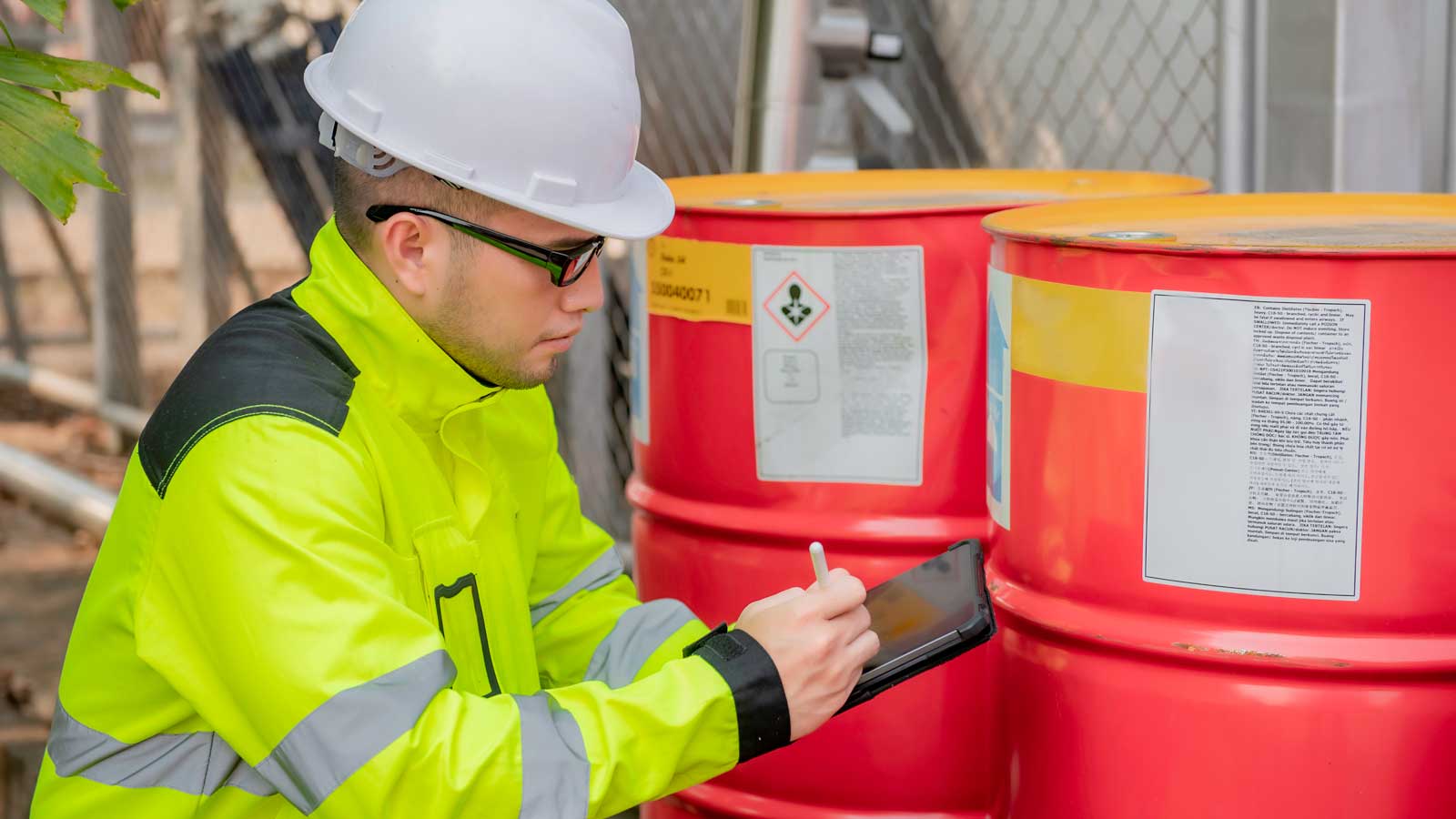
What is DSEAR and Does It Apply to Your Business? A Plain-English Guide for Surrey Employers
If you’ve heard the term DSEAR mentioned in the context of health and safety compliance but aren’t entirely sure what it means or whether it applies to you, you’re not alone.
The Dangerous Substances and Explosive Atmospheres Regulations 2002 – DSEAR for short – is one of those pieces of legislation that catches many businesses off guard, particularly following a significant amendment in 2015 that dramatically widened its scope.
This post breaks down what DSEAR actually requires, who it applies to, and what you need to do to stay on the right side of the law.
So What Exactly is DSEAR?
DSEAR was introduced to protect workers and members of the public from the risks of fire, explosion, and similar events caused by dangerous substances in the workplace.
A dangerous substance, under the regulations, is broadly defined as any substance or mixture that presents a physical hazard – including those that are flammable, explosive, or oxidising.
Crucially, the 2015 amendment extended the scope of DSEAR to include gases under pressure, classified under hazard class H280.
This single change brought every refrigerant into scope – not just the obviously flammable ones.
That means if your premises has air conditioning, refrigeration equipment, or a heat pump, DSEAR applies to you.
There are no exceptions based on size, sector, or the type of refrigerant involved.
Who Counts as an “Employer” Under DSEAR?
This is where many businesses are caught out.
Under DSEAR, the definition of “employer” is broad.
It covers not just the end user of refrigeration or air conditioning equipment, but also contractors, subcontractors, and self-employed persons working on site.
If you employ a contractor to service your air conditioning and they are working alongside your own staff, both parties have duties under the regulations.
The expectation is that employers cooperate and collaborate to ensure all DSEAR obligations are met.
What Does a DSEAR Risk Assessment Actually Cover?
Regulation 5 of DSEAR requires all employers and self-employed people to carry out a risk assessment identifying all potential risks posed by dangerous substances in the workplace.
For businesses with five or more employees, the significant findings must be recorded in writing.
For smaller businesses it is still best practice to do so, and it may be called upon as evidence of compliance.
The assessment must consider the hazardous properties of the substances involved, the people likely to be affected and the severity of any potential consequences, information from safety data sheets, the nature of the work being carried out, the likelihood of an explosive or flammable atmosphere forming, and the potential scale and effects of a fire or explosion.
Within the refrigeration, air conditioning and heat pump industry, work activities are broadly split into five categories by risk level.
Installation and repair or decommissioning are considered high risk.
Servicing and maintenance sit in the medium to high risk range.
Day-to-day operation of equipment, assuming it has been correctly sized and installed, is considered low risk – provided adequate controls are in place.
What Substances Need to Be Assessed?
The list of potentially dangerous substances that may need to be included in a DSEAR assessment is broader than many businesses expect.
Alongside refrigerants themselves – including HFCs, HFOs, CO2, hydrocarbons, and ammonia – the assessment may also need to cover oxygen-free nitrogen, trace gases, acetylene, propane, butane, solvents, adhesives, and paints used during installation and maintenance work.
Safety data sheets for all relevant substances should be held by the employer and their contents communicated to relevant staff.
Keeping Your Assessment Up to Date
A DSEAR risk assessment is not a one-off exercise.
It must be reviewed regularly and updated whenever significant changes occur – including changes to the substances used, modifications to plant or equipment, changes in working methods, changes to the workforce, or following any accident, near miss, or dangerous occurrence.
Many employers note the next planned review date each time the assessment is completed, which is good practice.
Need Help Getting Started?
At ESI: Fire Risk Assessment Surrey, we carry out DSEAR risk assessments for commercial and industrial premises across Surrey and the surrounding areas.
Whether you’re starting from scratch or need an existing assessment reviewed and updated, our qualified assessors can help ensure you are fully compliant.
Get in touch today for a free, no-obligation consultation.
Further Reading:
- HSE DSEAR Guidance: https://www.hse.gov.uk/fireandexplosion/dsear.htm
- DSEAR Approved Code of Practice: https://www.hse.gov.uk/pubns/books/l138.htm
- FETA DSEAR Guidance Document: https://www.feta.co.uk/publications/feta-publications
- DSEAR Regulations in full: https://www.legislation.gov.uk/uksi/2002/2776/contents/made